Klaus Detterick
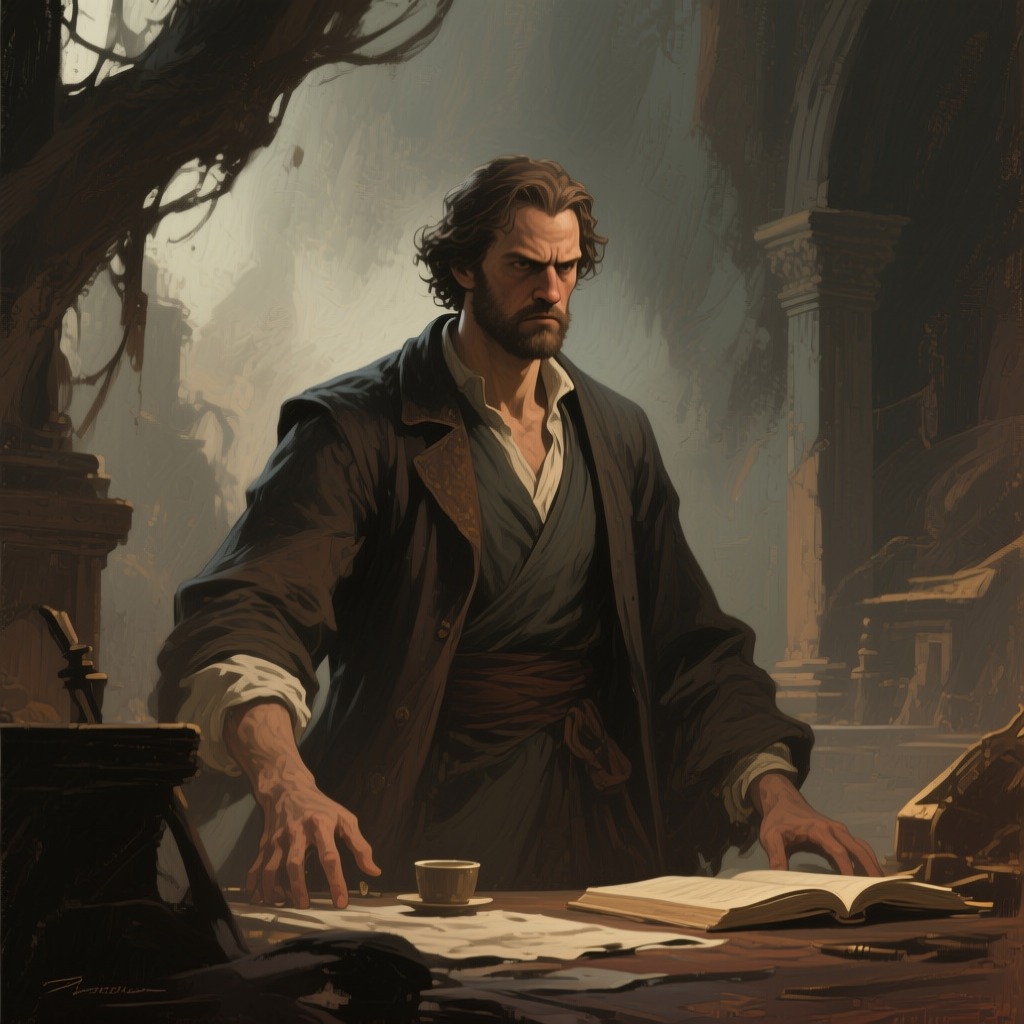
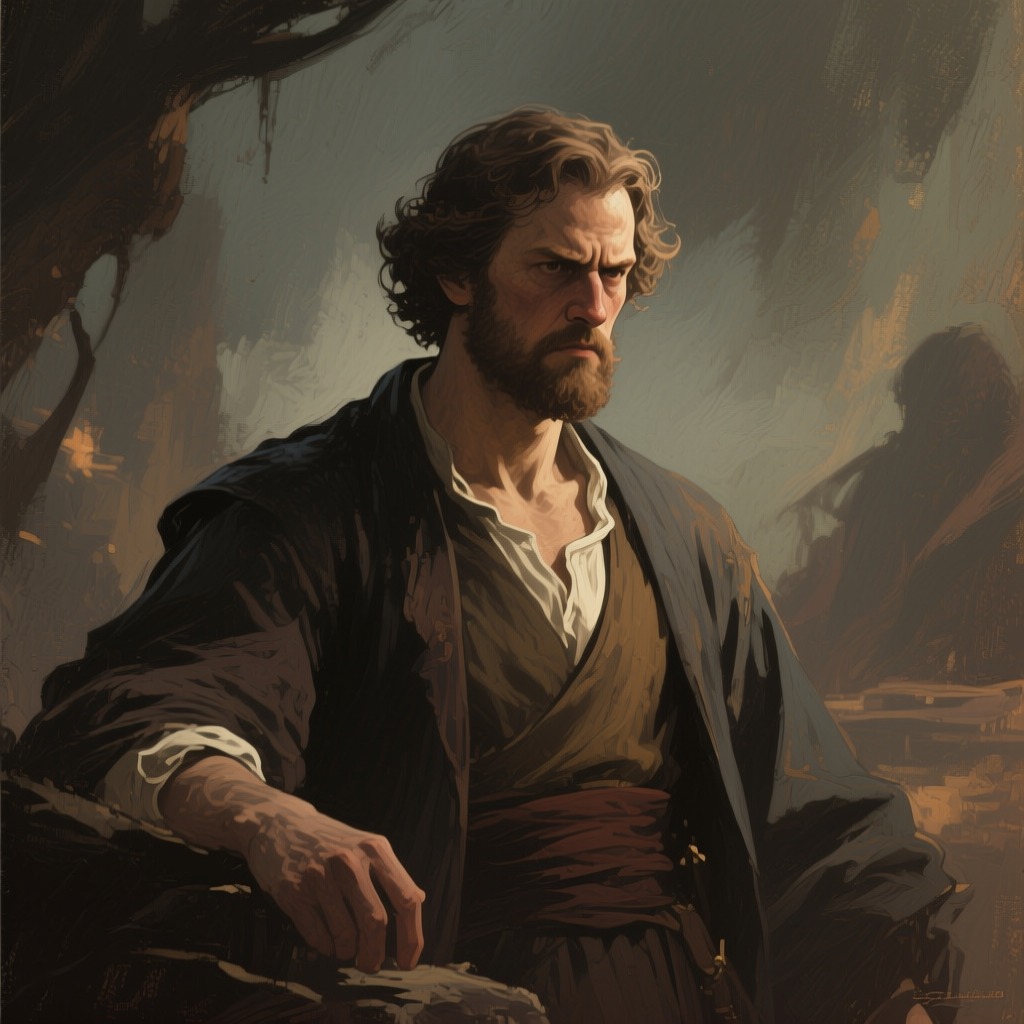
Klaus Detterick is the father of the nine-year-old twin girls, Cora and Kathe, whose rape and murder form the central crime for which John Coffey is wrongly convicted and executed. A cotton farmer in Trapingus County during the Depression, Detterick's desperate pursuit of his daughters' abductor and his anguished testimony at Coffey's trial make him a figure of profound, uncomprehending grief, and his presence at Coffey's execution underscores the tragic irony of the novel's central injustice.
Identity and Background
Klaus Detterick owned one of the forty or fifty prosperous cotton farms in the southern part of the state, a man who, by the standards of the 1930s, was considered well-to-do because he actually paid his store bill in cash at the end of most months and could meet the bank president's eyes on the street. The farmhouse was clean and commodious, and in addition to cotton, the family kept chickens and a few cows. He and his wife, Marjorie, had three children: Howard, who was twelve or thereabouts, and the twin girls, Cora and Kathe. On a warm night in June of 1932, the girls asked for and were given permission to sleep on the screen-enclosed side porch, a great treat for them. Their mother kissed them goodnight just shy of nine, the final time she saw either of them until they were in their coffins.
The Pursuit
Klaus was up at first light to do the milking, and the porch was on the side of the house away from the barn, so he never thought to look in on the girls. When Marjorie discovered the empty porch—the blankets cast into one corner, the screen door yanked off its upper hinge, and spatters of blood on the boards—she screamed for him. Klaus came on the dead run, his workboots whitened by the half-full pail of milk he had spilled on them. Despite his wife's pleas not to go hunting after the girls alone, he took the shotgun he kept mounted in the mudroom and gave his son Howie the .22 they had been saving for his birthday. They set off, reasoning that the blood was still closer to true red than the maroon that comes when blood has well dried, meaning the abduction hadn't happened too long ago. Klaus reasoned there was still a chance for his girls, and he meant to take it. Neither he nor Howie could track worth a damn—they were gatherers, not hunters—but they found a shred of yellow cotton cloth from Kathe's sleeping-shorts and a piece of faded green cloth from Cora's nightie, and set off at a near-run with their guns held in front of them. They followed the track of the abductor three miles to the northwest, but when his trail ran out of open fields and into piney woods, they lost it. Along the way they had found the yellow top that matched Kathe's shorts and another piece of Cora's nightie, both drenched with blood, and a certain cold certainty must have been filtering into their hot hopes by then. When Deputy Rob McGee's posse caught up to them, Klaus and Howie were stumbling desperately around on the edge of the woods. McGee let them go on with the posse, but made them unload their weapons, a precaution that probably saved John Coffey's life, as Klaus, upon finding the man he believed to be the killer, would have shot him.
The Discovery and Aftermath
When the posse found John Coffey sitting on the riverbank, bawling up at the sky with the body of a naked girl curled in each arm, it was Klaus Detterick who broke the tableau. Screaming, he flung himself at the man he believed to be the monster who had raped and killed his daughters. Sam Hollis, the biggest man among them, tried to hold him back, but Klaus seemed to almost shrug off his encircling arms. He launched a flying kick at Coffey's head, his workboot scoring a direct hit on Coffey's left temple, but Coffey seemed not to feel it at all. It took four men to haul the hysterical farmer off John Coffey, and he fetched Coffey many good licks before they finally did. When he was finally pulled off, all the fight went out of him, as if some strange galvanizing current had been running through the huge black man, and when contact with that power source was finally broken, he went as limp as a man flung back from a live wire. He knelt wide-legged on the riverbank with his hands to his face, sobbing, and his son Howie joined him, the two of them hugging each other forehead to forehead.
At the Execution
Klaus Detterick and his wife, Marjorie, were present at John Coffey's execution on November 20, 1932. Paul Edgecombe did not recognize them at first, as they looked like elderly people who hadn't yet climbed out of their thirties. As the guards neared the platform where the electric chair waited, Marjorie spat, "Die slow, you son of a bitch!" and Klaus grunted his approval. When Brutal Howell began the formal sentencing, Marjorie screamed, "Kill him twice, you boys! You go on and kill that raping baby-killer twice, that'd be just fine!" Klaus pulled her against his shoulder, and she began to sob. One side of his nose was bleeding, a narrow trickle of red working its way down into his narrow-gauge mustache. When Edgecombe opened the paper the following March and saw that Klaus had died of a stroke, he was about the least surprised man on earth.